Français
  Nederlands
The smartphone market today is larger and more diverse than ever before, making the search for a new phone both exciting and challenging. To make the right choice, it is essential to start with a thorough analysis of your personal needs. After all, a mobile phone is not a one-size-fits-all product; what is the perfect device for one person may be an unnecessary luxury or a disappointment for another.
Ask yourself what you will primarily use the device for. Are you an active photographer who demands the highest camera performance, or are you simply looking for a reliable partner for daily communication, online banking, and social media? Battery life also plays a crucial role for people who are on the go, while avid mobile gamers need a powerful processor and a high-quality display with a high refresh rate.
By mapping out your daily habits and requirements in advance, you prevent yourself from paying unnecessarily for advanced features you will never use, or compromising on aspects essential to your daily comfort.
Android versus iOS and the Evolution of Phone Design
One of the most important decisions when purchasing a new smartphone is the choice of operating system: Android or iOS. Apple's closed ecosystem, powered by iOS, is globally renowned for its intuitive interface, long-term software support, and seamless integration with other Apple devices such as the iPad and Mac. On the other hand, the flexible Android platform, used by various manufacturers, excels in extensive personalization, freedom of choice, and a wide range of price categories.
In addition to the software, the physical form factor of phones has changed revolutionary over the past years. Where we previously saw mainly traditional flat screens, you can now choose striking designs such as a flip screen or phones with elegant, curved edge screens. Modern flip devices combine nostalgia with innovative foldable screens, providing you with a large display that still fits compactly in your pocket. Edge screens, on the other hand, offer a borderless, immersive visual experience that is aesthetically highly appealing.
Your ultimate choice between these designs is closely related to how you hold and carry your phone daily.
Important Specifications: Storage, RAM, and Battery Life
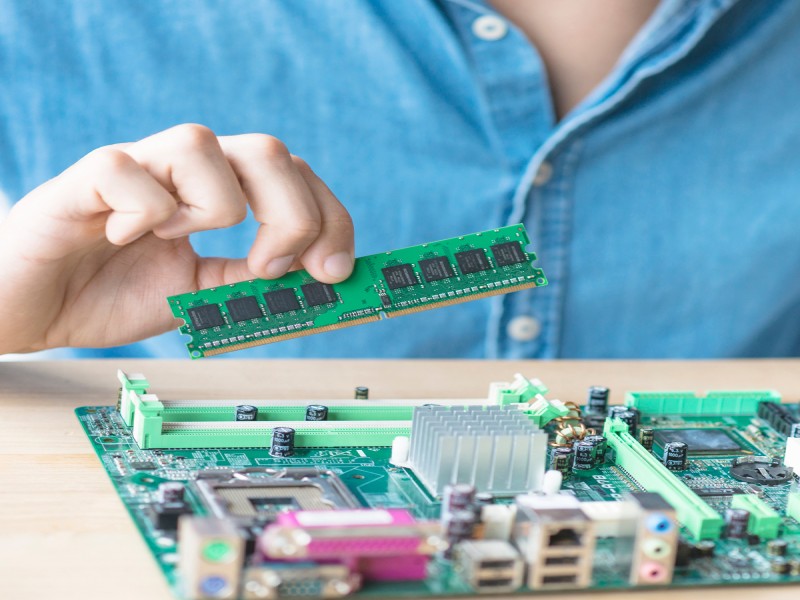
In addition to the software and appearance of the phone, internal specifications determine how smoothly your device functions in practice. First and foremost, consider storage capacity and random access memory (RAM). For the average user, a storage capacity of at least 128 GB is the standard today to store apps, photos, and videos without worries.
If you film a lot in high quality, 256 GB or more is recommended. Furthermore, RAM ensures that you can switch quickly between different applications; for Android, 6 GB to 8 GB of RAM is optimal for multitasking, whereas iOS often requires less due to more efficient optimization. Do not forget to check the battery capacity as well. A battery capacity of 4000 mAh to 5000 mAh usually guarantees that you will get through the day without intermediate charging.
Fast charging has become an extremely useful additional feature, allowing you to recharge a large part of your phone's battery within thirty minutes.
Finding the Perfect Balance Between Price and Quality
When making the final purchase, the budget naturally plays a decisive role, with the search for the ideal price-quality ratio being central. The smartphone market is roughly divided into three segments: entry-level models, the mid-range, and high-end flagships. Although the absolute top models are tempting with their advanced technologies and marketing campaigns, today's mid-range often offers the most value for your money.
Manufacturers now equip these devices with excellent cameras, fast processors, and screens that are hardly inferior to the much more expensive variants. It is therefore wise to look critically at which specifications are truly necessary for you. A more expensive phone is not automatically the best choice for your specific situation. By comparing reviews and focusing on performance rather than just brand name, you can make a sustainable investment. A smartly selected smartphone will last for years without you having to pay top dollar, provided you choose a reliable brand that guarantees regular security updates.